By mid-October, most Chicago-area yards have the same corner: paper bags full of leaves, a heap of branches from the last windstorm, a cracked planter, patio furniture that never made it into the garage, and a section of fence that came down in September. Your village will take exactly one item on that list, and only until a cutoff date that arrives sooner than most homeowners expect. Here is what municipal yard waste programs accept this fall, what they refuse outright, and how to clear the rest before the ground freezes.
Key Takeaways
- Illinois has kept landscape waste out of landfills since 1990, so leaves and brush move through a separate composting stream, not your garbage cart.
- Chicago collects bagged yard waste April through November, but only when a resident requests it through 311.
- Suburban programs run on stickers or subscriptions and shut down between Thanksgiving and mid-December, with dates that change yearly.
- Soil, sod, pavers, railroad ties, stumps, fencing, and deck boards are not landscape waste, and no sticker program covers them.
- Orange Crew truckload pricing runs $150 for a 1/8 load up to $650 for a full load, confirmed before the crew starts.
Why Fall Yard Waste Is a Different Problem Than Spring Cleanup
Spring cleanup is forgiving: debris builds slowly and a missed Saturday costs nothing. Fall gives no such margin. Leaf drop across Cook, Lake, and DuPage counties concentrates into six to eight weeks from mid-October into early November, landing on top of three other jobs competing for the same weekends: branches downed by autumn storms, the end-of-season backyard teardown, and any landscaping project you wanted finished before the first hard freeze. Then the window shuts, and whatever is still in the yard kills the grass underneath and becomes a spring problem.
There is also a legal dimension most homeowners never hear about. Illinois banned landscape waste from municipal solid waste landfills effective July 1, 1990, so your leaves are legally routed to permitted composting sites instead. That is exactly why your municipality runs a separate yard waste stream at all, and why the accepted-materials list is so specific. The practical consequence: stuffing leaf bags into your regular cart is not a shortcut, and haulers routinely leave those bags at the curb.
What Your Village Yard Waste Program Will Actually Take
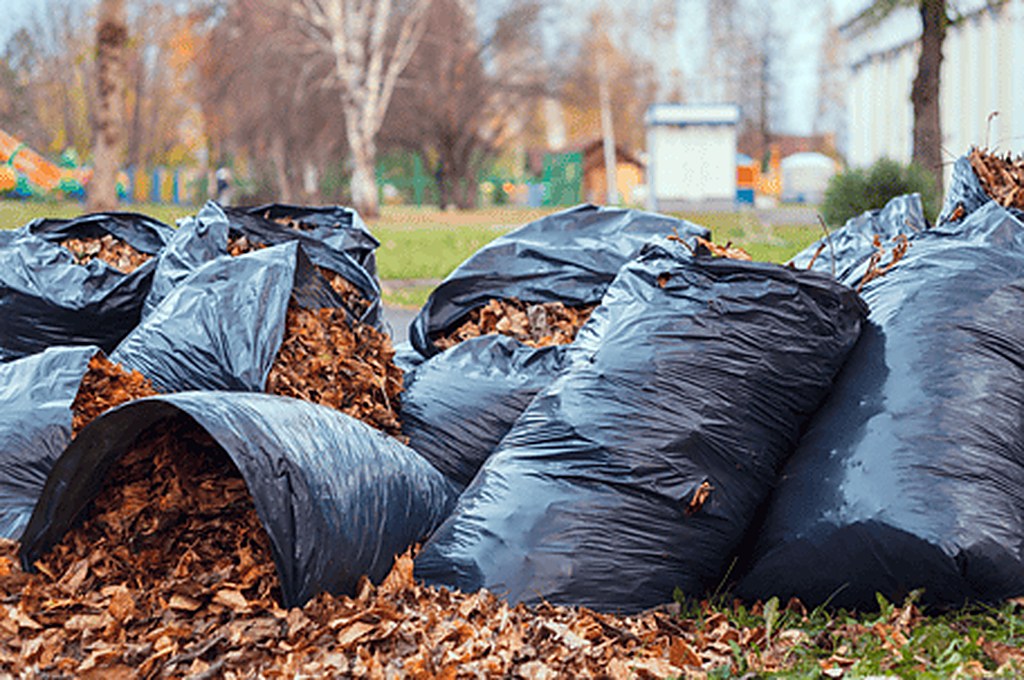
In the city of Chicago, bagged yard waste collection is request-based rather than automatic. The city’s yard waste collection page sets the terms: you contact 311, and Streets and Sanitation sends a separate truck for bags left at the curb or in the alley. Those bags stay out of your black garbage cart and must never go in the blue recycling cart, where leaves contaminate the entire load. The season runs April through November, and everything collected is composted rather than landfilled.
In the suburbs, collection is usually built into your weekly service, but you pay per bag with a sticker or buy a flat seasonal subscription. Arlington Heights, whose landscape waste program is typical of the northwest suburbs, shows both how generous and how finite these programs are. The 2026 season runs March 30 through December 18, individual stickers cost $2.86, a full-season subscription is $155.30, and the village runs a fall leaf “2 for 1” collection from October 19 through December 18, when two bags go out for a single sticker. Confirm the current sticker price and retailer list before buying, since both change year to year.
Neighboring suburbs each set their own dates, bag limits, and pricing, and most wrap up between Thanksgiving week and mid-December. Check your village’s public works page in September rather than assuming last year’s dates carried over.
Across nearly all of these programs the accepted list is narrow: leaves, grass clippings, weeds, spent garden plants, pine needles, shrub trimmings, and small branches, in kraft paper lawn bags or tied bundles. Typical limits run around 50 pounds per bag, with branches no longer than four feet and no thicker than two inches.
What Municipal Pickup Will Not Take
This is where most fall cleanups stall. The pile in your yard is rarely all leaves, and everything below falls outside every sticker program in the region:
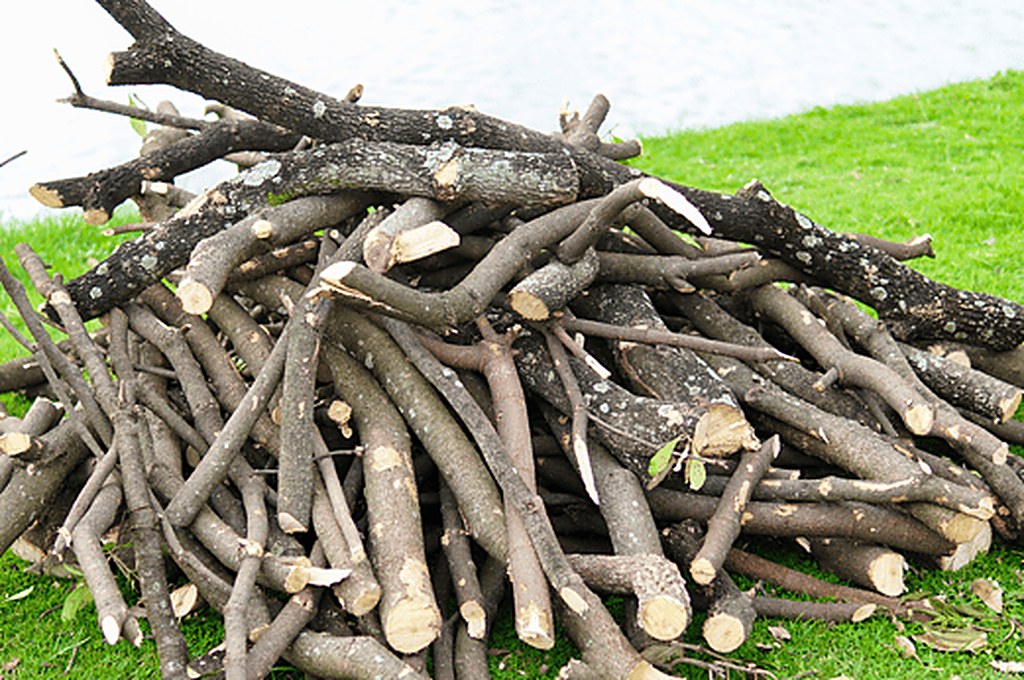
- Oversized branches, logs, and stumps. Anything past the village's length and diameter limit, plus anything with a root ball attached. Storm damage almost always exceeds those limits.
- Soil, sod, gravel, and landscaping rock. Not landscape waste under the state definition, so they never enter the composting stream. These need a soil and sod removal pickup.
- Pavers, retaining wall block, broken concrete, and railroad ties. Hardscape from a patio teardown is inert construction material and requires construction debris removal.
- Old fencing, deck boards, shed panels, and landscape timbers. Pressure-treated lumber is never accepted as yard waste.
- End-of-season backyard items. Patio furniture, grills, planters, pool liners, and play equipment are junk removal, not landscaping waste. See our items we remove list.
- Sheer volume. At $2.86 a sticker, a large lot's leaf load costs more in stickers than one hauled pickup, and you still bag every bit yourself.
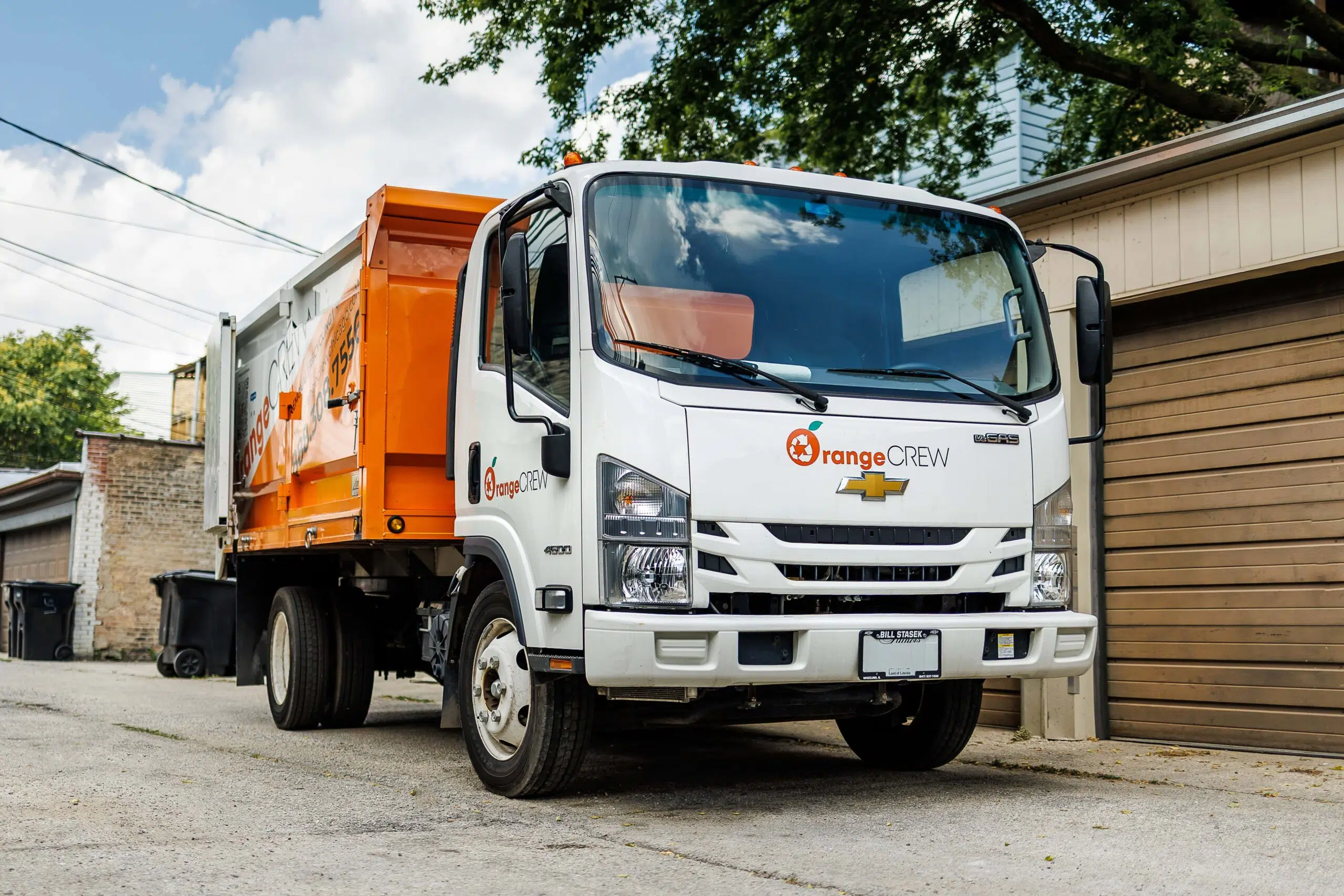
That gap is what our yard waste removal service fills: one crew, one visit, no sorting between what qualifies for a sticker and what does not.
A Realistic Chicago Fall Cleanup Timeline
September: clear the hardscape and heavy items
Do the non-leaf work first, while the ground is dry and firm enough to roll a wheelbarrow across. Pull the summer items out: patio furniture that will not survive another winter, the grill you replaced, dead planters, and any fencing or deck section already on its way down. Heavy loads move far more easily now than after the first freeze-thaw cycle locks them into the mud.
October: leaves plus the two-for-one window
Leaf drop peaks, and if your village runs a fall two-for-one promotion this is when it starts. Keep the two streams separate as you work: bagged leaves for the village truck, everything oversized in one staging pile for a single hauled pickup. Sorting once beats sorting twice.
November: last call
Most suburban programs end this month. Clear gutters and downspouts before they freeze, cut back perennials, and schedule anything the village will not take. Junk removal demand peaks in November across the northwest suburbs, so book a week or two out rather than the day before your cutoff.
December and after: the leftovers
Once the season closes, a hauled pickup is the only option short of leaving the pile until spring. Crews work all winter, but frozen ground and snow add labor, so clearing in November is cheaper.
What Fall Yard Waste Removal Costs
Junk removal is priced by volume, not by the hour or the bag. Truckload rates are $150 for a 1/8 load, $280 for a quarter, $430 for a half, $550 for three quarters, and $650 for a full load. Single items start around $120, and yard machines such as an old mower run $180. Full details are on our pricing page.
Three factors move a fall quote: volume, or how much of the truck your pile fills; access, since an open driveway loads faster than a narrow gate at the back of a long lot; and material weight, because soil, gravel, and pavers hit a truck weight limit long before they fill its space. Text photos of your pile to (224) 386-4836 for a number before anyone drives out.
How a Fall Yard Waste Pickup Works
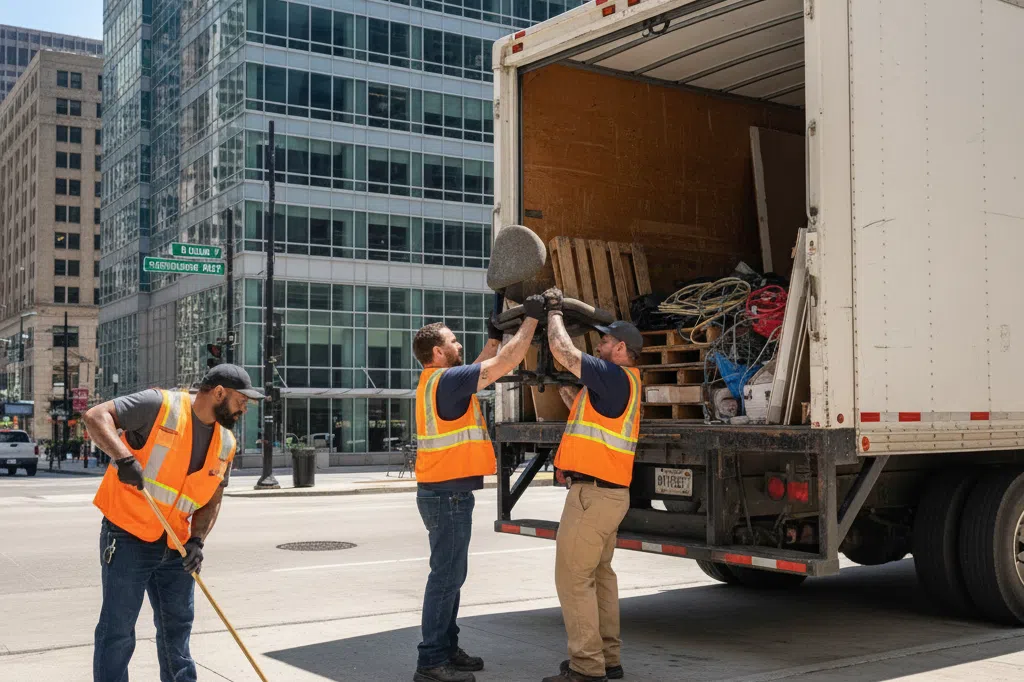
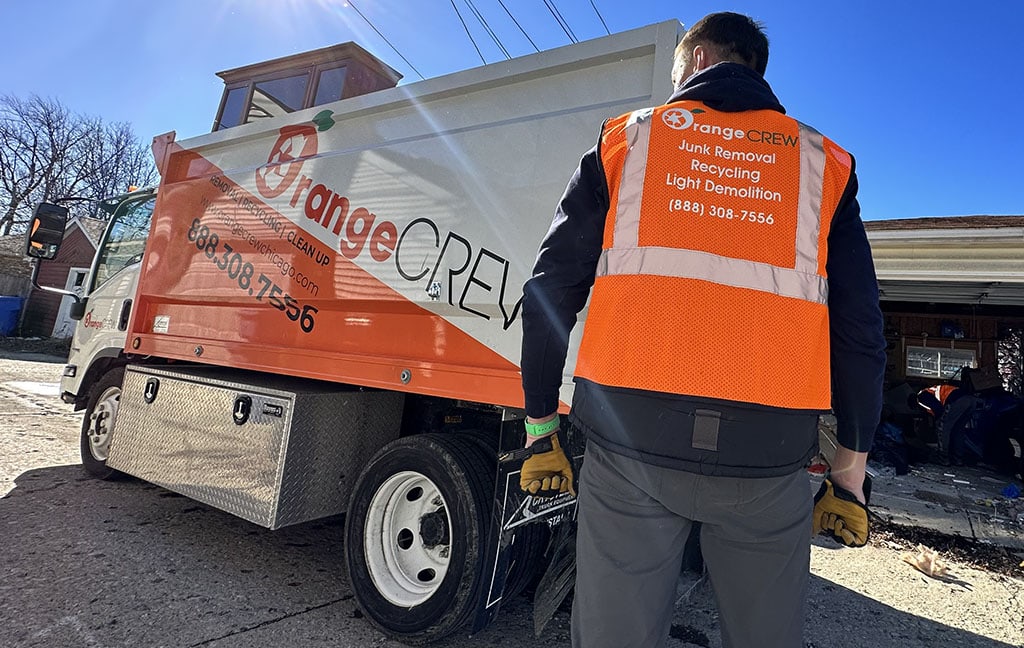
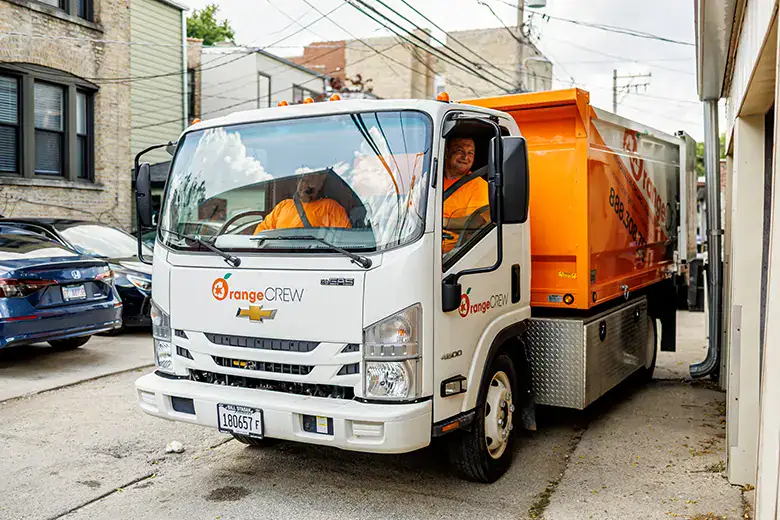
The process is deliberately short. Book online or by phone, send photos if you want a firm estimate up front, and pick a window. On the day the crew calls ahead, confirms the price on site before touching anything, and loads everything themselves, including material still attached to the ground such as sod or a half-collapsed fence line. No bagging, no dragging to the curb, no dump runs, and the site is raked clean before the truck leaves.
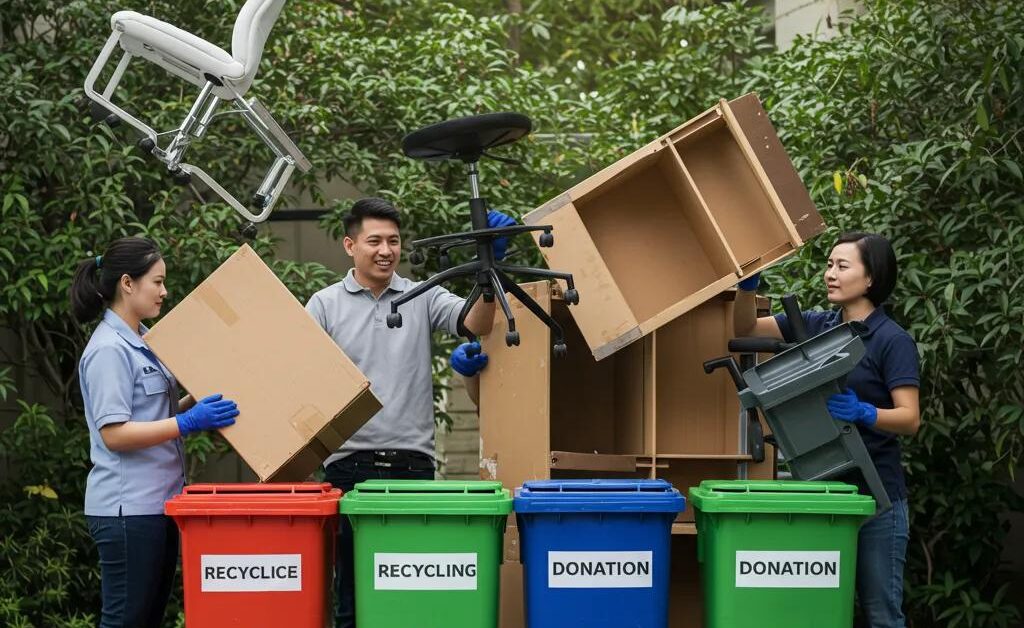
Material is then sorted rather than dumped: clean landscape waste to composting, metal and clean wood recycled where possible, only the remainder to disposal. The full sequence is laid out in how it works, and for a whole backyard reset rather than a leaf haul, this pairs with residential junk removal.
Where We Pick Up Fall Yard Waste
Our main office is at 4747 W. Peterson Ave, Suite 407B, Chicago, IL 60646, with crews running out to Cook, Lake, DuPage, and McHenry County daily. Hours are Monday to Friday 7am–7pm and Saturday 9am–3pm.
Fall pickups run throughout Chicago and the surrounding suburbs, with the full coverage area listed on our service locations page.
Frequently Asked Questions
When does yard waste collection end in the Chicago area?
It varies by municipality. Chicago's bagged collection runs April through November on a 311 request basis. Suburban programs typically end between Thanksgiving week and mid-December, with Arlington Heights running through December 18 in 2026. Confirm your village's cutoff each September, since dates shift slightly every year.
Will you take branches and logs too big for village pickup?
Yes. Oversized branches, cut logs, brush piles, stumps, and old firewood are standard yard waste removal work, with no length or diameter limit and no bundling required.
Can you remove leaves if I have not bagged them?
Yes. Crews arrive with rakes, tarps, and shovels and clear loose leaf piles and garden beds directly. Bagging in advance is optional and does not change the volume-based price.
What does a typical fall yard cleanup cost?
Most single-property cleanups land between a 1/8 and a half load, roughly $150 to $430, depending on how much brush, hardscape, and end-of-season junk comes out with the leaves. Text photos to (224) 386-4836 for a firm number before booking.
Do you also take the patio furniture and grill?
Yes. Backyard cleanups routinely include patio sets, grills, planters, kiddie pools, and play equipment alongside the landscape waste — one pickup, one quote, rather than separate visits.
Ready to clear the pile before the first freeze? Request a fall yard waste pickup or call (888) 308-7556 to lock in a window.