
An office cleanout is a project, not an errand. Property managers turning over a suite, facility teams downsizing after a move to hybrid work, and office managers closing out a lease all face the same problem: a fixed deadline, a building full of desks and electronics, and other tenants who cannot be disrupted. This guide lays out exactly what to clear, when to start, and what it costs, so your next office junk removal in Chicago runs on schedule instead of derailing your week.
Key Takeaways
- Office junk removal covers desks, cubicles, chairs, file cabinets, carpet, electronics, and break-room appliances, usually cleared in a single scheduled pickup.
- Property managers should start three to four weeks before the move-out or turnover date to protect deposits and hit lease deadlines.
- Pricing is volume-based and confirmed before work begins, with no hidden fees for labor, loading, or disposal.
- Illinois bans many electronics from landfills, so office e-waste must be recycled through proper channels.
- Donation and recycling come first, which keeps usable furniture out of the waste stream and supports sustainability reporting.
Why Office Cleanouts Are Different From Home Junk Removal
Clearing an office is not a bigger version of clearing a garage. The scale is different, the deadlines are stricter, and the building itself imposes rules that a house never does. Understanding those constraints up front is what separates a smooth turnover from a scramble.
First, there is volume. A single floor can hold dozens of workstations, hundreds of feet of shelving, and a server room's worth of electronics, and it all has to move at once so the space is ready for the next tenant or the build-out crew. Second, there is timing: elevator reservations, loading-dock windows, and after-hours access rules mean the work often has to happen on nights or weekends. Third, there is accountability. You may need a receipt for the landlord, a chain-of-custody note for IT assets, and proof that recyclables were diverted. A hauler that handles full-scale commercial junk removal in Chicago plans around all three from the start.
What Counts as Office Junk?
Knowing what falls into an office cleanout helps you scope the job and get an accurate quote, and it is work our crews handle daily for offices and commercial facilities of every size. Most Chicago offices produce a predictable mix of five categories:
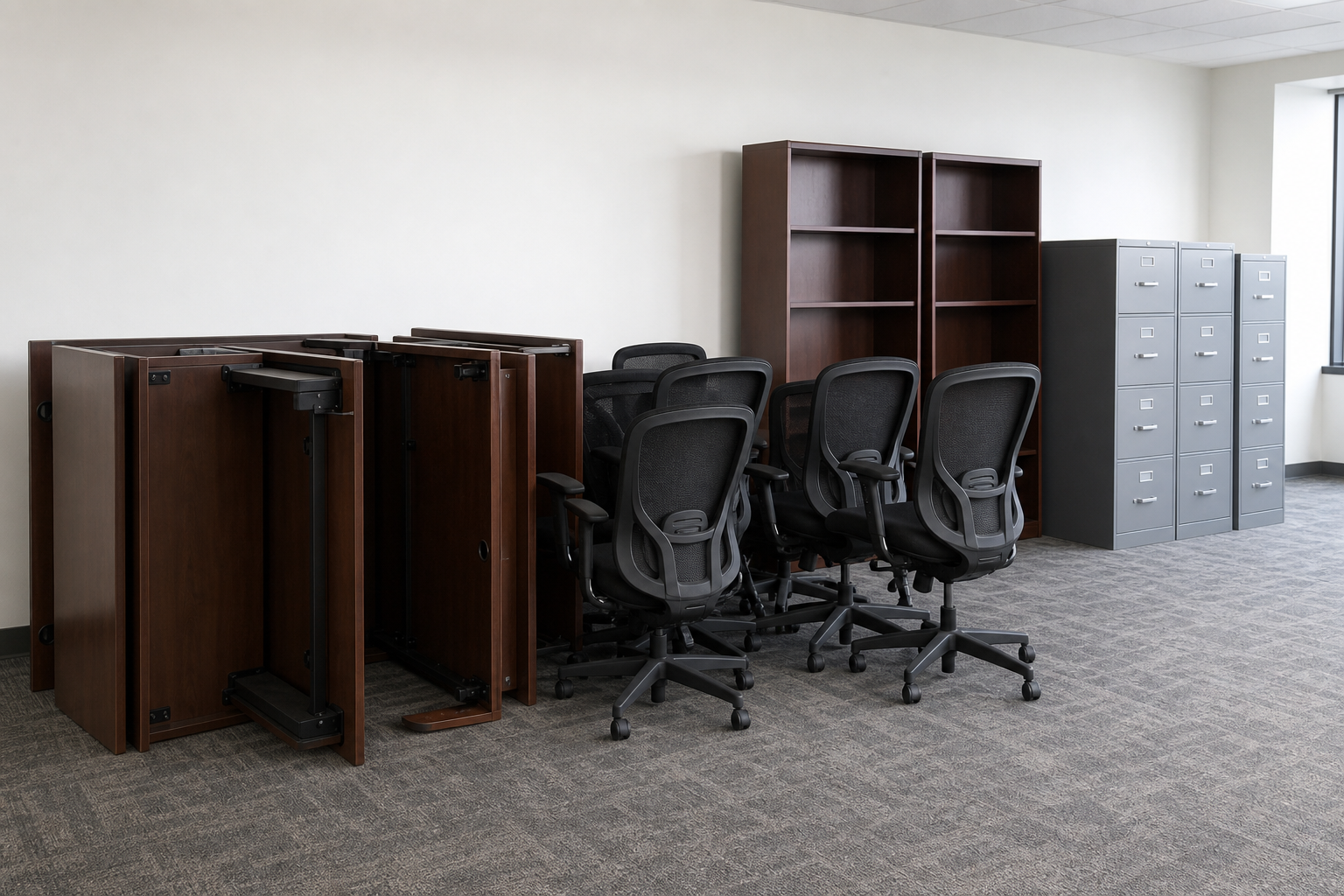
- Office furniture: desks, workstations, cubicle panels, conference tables, bookcases, reception seating, and rolling chairs.
- Storage and filing: metal and lateral file cabinets, lockers, shelving units, and boxed records.
- Electronics and e-waste: desktop computers, monitors, printers, copiers, servers, phones, and tangled cabling.
- Break-room appliances: refrigerators, microwaves, water coolers, dishwashers, and vending machines.
- Renovation and flooring debris: old carpet, ceiling tiles, drywall, and fixtures pulled during a remodel.
Each category has its own handling and recycling rules, which is why a single vendor who can take all of it in one trip beats juggling separate contractors. If you are unsure whether something qualifies, the full list of office items we haul away spells out what a crew can and cannot take.
The Office Cleanout Timeline: A 3-Week Plan
The single biggest cause of a stressful cleanout is starting too late. A tenant-improvement deadline or turnover date leaves no room for a missed pickup, so work backward from the handover and follow a phased plan.
3–4 Weeks Before: Plan and Inventory
Walk the space room by room and note everything that has to go, including storage closets and the server room. Flag sensitive items early: hard drives, confidential documents, and branded materials that need secure handling. Confirm your move-out date, reserve the freight elevator and loading dock, and check the building's rules for after-hours work.
This is also the stage to lock in your hauler. Getting a quote now fixes the crew size and price before the calendar tightens. Vet each vendor on licensing, insurance, and documented disposal practices, since those three factors are what separate a reliable turnover from a last-minute problem.
1–2 Weeks Before: Sort and Coordinate
Separate items into keep, relocate, donate, and remove, and label each zone so the crew never has to guess. Give staff a firm deadline to clear personal belongings from desks and lockers, since stray items are the most common cause of day-of delays.
Prioritize the bulky pieces that drive both cost and labor. Desks, cubicle walls, and seating should be staged first, because their volume has the biggest effect on both your quote and how long the job takes on pickup day.
Pickup Day: Removal and Handover
The crew arrives inside the reserved window, confirms the walkthrough, and hauls everything from wherever it sits. There is no need to drag items to the curb or the dock. Furniture, electronics, and appliances are sorted for donation, recycling, or disposal on the spot, the work area is swept, and you receive a receipt plus any documentation your records require.
Running a larger or multi-floor project? Our step-by-step office cleanout guide expands this timeline with staging tips for bigger spaces.
Handling Office Electronics and E-Waste
Old technology is where office cleanouts most often go wrong. Illinois bans many electronics from landfills, so dumping monitors, computers, and printers is not a legal option. Orange Crew routes office equipment through a dedicated office e-waste removal and recycling stream so every device is handled correctly.
Before anything leaves the building, account for every data-bearing device and wipe or destroy it according to your IT policy. Assign one person to track serial numbers so nothing with company data slips out uncontrolled, and keep that log with your cleanout paperwork.
The rules themselves are worth a quick read. The Illinois EPA electronics recycling program lists the covered devices that must be recycled rather than trashed.
For a plain-language overview of responsible disposal and reuse options, lean on recognized federal EPA guidance on electronics donation and recycling when you write internal policy, and keep certificates of recycling or destruction on file for your compliance records.
If your office is replacing a fleet of machines, plan the disposal side as carefully as the purchase. Batching monitors, laptops, and peripherals together into one scheduled pickup keeps the cost down and the timeline short instead of paying for repeat trips.
Furniture, Carpet, Appliances, and Renovation Debris
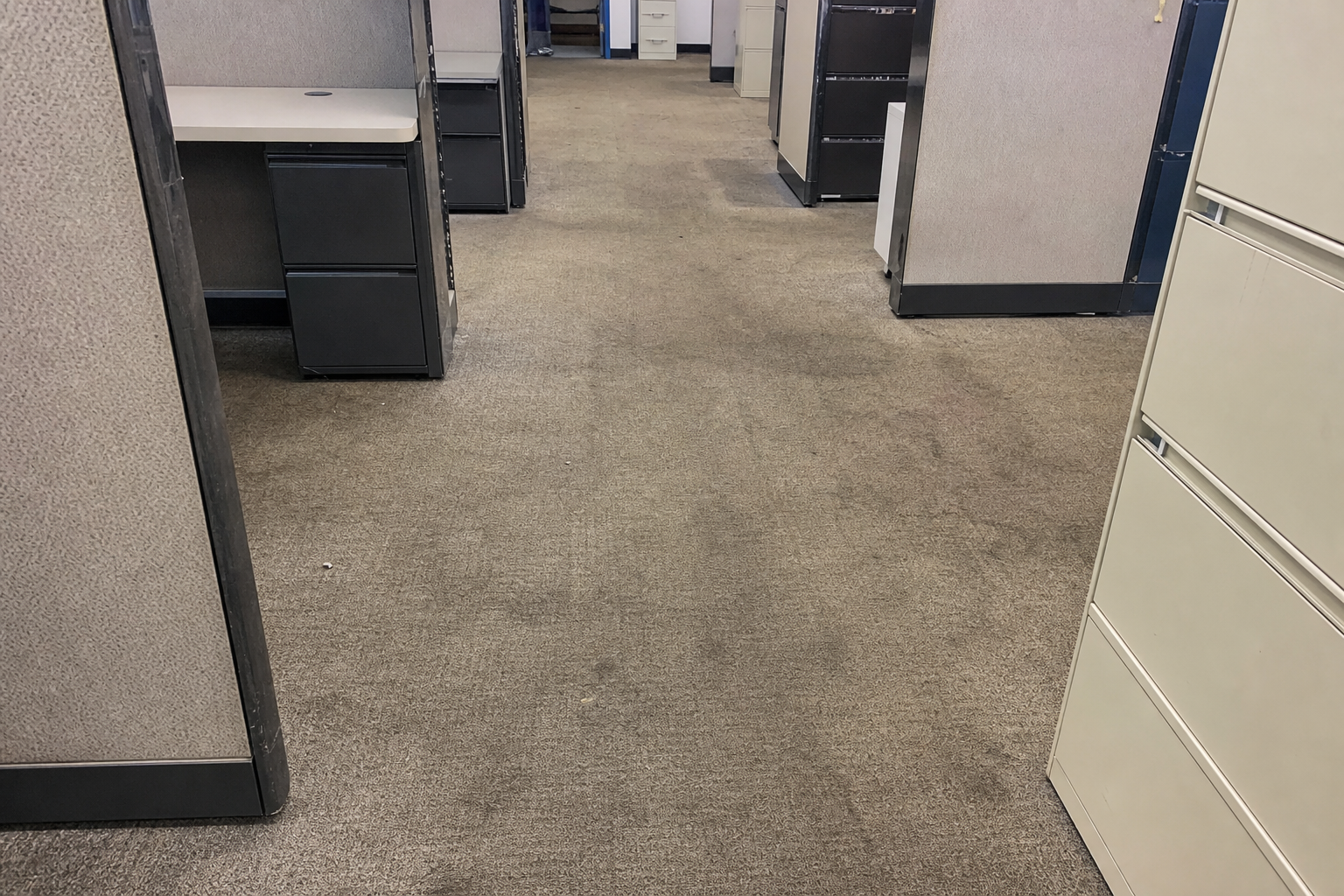
Most turnovers involve far more than furniture, and each material has its own path. Worn flooring is a common surprise: once a suite is empty, tired carpet has to come up before the next tenant moves in or new flooring goes down.
That tear-out is a job on its own. Our commercial office carpet removal service pulls and hauls broadloom, glue-down carpet, and carpet tiles so the slab is ready for whatever comes next.
Break rooms add another layer. Refrigerators, freezers, and dishwashers fall under break room appliance removal and recycling, where units are drained and processed to code instead of going straight to a dumpster.
Finally, if the project includes a build-out or demolition, the leftover drywall, ceiling tile, trim, and fixtures pile up quickly. Bundling that into office renovation and construction debris removal on the same visit keeps your vendor list short and your schedule intact.
How Office Junk Removal Pricing Works in Chicago
Orange Crew prices by volume, meaning you pay for the space your items take up in the truck rather than by the hour. Every estimate is confirmed before work starts, with no hidden fees for labor, loading, fuel, travel, or responsible disposal. The full model lives on our transparent junk removal pricing page, but here is what office managers can budget around.
Standard truckload pricing runs $150 for a 1/8 load, $280 for a 1/4 load, $430 for a 1/2 load, $550 for a 3/4 load, and $650 for a full load. Single-item pickups start around $120, which is handy when only one or two pieces need to go.
For quick budgeting, common office items fall into these per-item ranges:
- Large desk: $150
- Table or storage cabinet: $120
- Office chair: $120
- Computer, standard printer, or fax machine: $120
- Break-room refrigerator: $150–$200
Because volume pricing rewards consolidation, clearing an entire suite in one visit almost always beats piecemeal pickups on cost. Items in hard-to-reach spots or that need disassembly can add a charge, so confirm the quote up front and you will not be surprised on the invoice.
Booking and What to Expect on the Day
Scheduling takes a few minutes. You can book office junk removal online or request an estimate, and the team confirms a two-to-three-hour arrival window with a call or text when the crew is en route. Same-day and next-day service is often available, which matters when a lease deadline or incoming tenant is closing in.
Want to see the full sequence from quote to eco-friendly disposal before committing? The Orange Crew junk removal process is laid out step by step.
For portfolios with recurring turnover, ongoing and multi-site service can be set up in advance, so a single point of contact covers every property on your books and building permits, insurance requirements, and local disposal rules never catch your team off guard.
Keeping the Cleanout Eco-Friendly
Sustainability is now part of most office moves, and it should be. Donation and recycling come before the landfill, so usable desks, chairs, and shelving can find a second home with local nonprofits while metal, cardboard, and electronics are routed to approved recyclers.
Diverting reusable furniture is one of the easiest wins for a corporate sustainability goal, and it is often the difference between a cleanout that generates a landfill bill and one that generates a donation receipt. For teams turning this into policy, the EPA sustainable materials management guidance offer a simple framework to document your diversion efforts.
Frequently Asked Questions
How much does office junk removal cost in Chicago?
It depends on volume. Truckload pricing runs from $150 for a 1/8 load up to $650 for a full load, and single items start around $120. Common office pieces like a large desk ($150) or an office chair ($120) fall into set per-item rates. Because pricing is volume-based and confirmed before work begins, you always know the number ahead of time.
Can you clear an office after hours or on weekends?
Yes. Many Chicago office cleanouts are scheduled outside business hours to avoid disrupting tenants and staff, or to fit building loading-dock and elevator rules. Let us know your window when you book so we can reserve the right crew.
What happens to our old office furniture and electronics?
Usable furniture is evaluated for donation, recyclable materials are sorted for recycling, and electronics are handled through our e-waste recycling process in line with Illinois landfill rules. Only what cannot be reused or recycled goes to disposal.
How far in advance should a property manager schedule?
Aim to request a quote three to four weeks before your move-out or turnover date, and lock in the pickup one to two weeks out. Same-day and next-day service is often available for smaller loads, but planning ahead protects your deadline during busy seasons.
Do we need to move everything to the loading dock first?
No. Orange Crew is full service, so our crew removes items from offices, storage rooms, and server closets wherever they sit. Just keep walkways clear and point out anything that needs special handling.